The killing fields of Matabeleland
My day in the company of Sipho Nikani

In the hot and scratchy bush of Matabeleland, 45 minutes north of Bulawayo, Zimbabwe’s second city, sits a war memorial that you’d miss if you weren’t deliberately seeking it.
Today I went seeking it.
The memorial remembers the decisive battle on November 1st, 1893, in which 700 soldiers of Cecil Rhodes’ British South Africa Company defeated 10,000 impis (warriors) of Lobengula, the king of the Matabele people, driving them out of their land and taking control of what would become Southern Rhodesia.
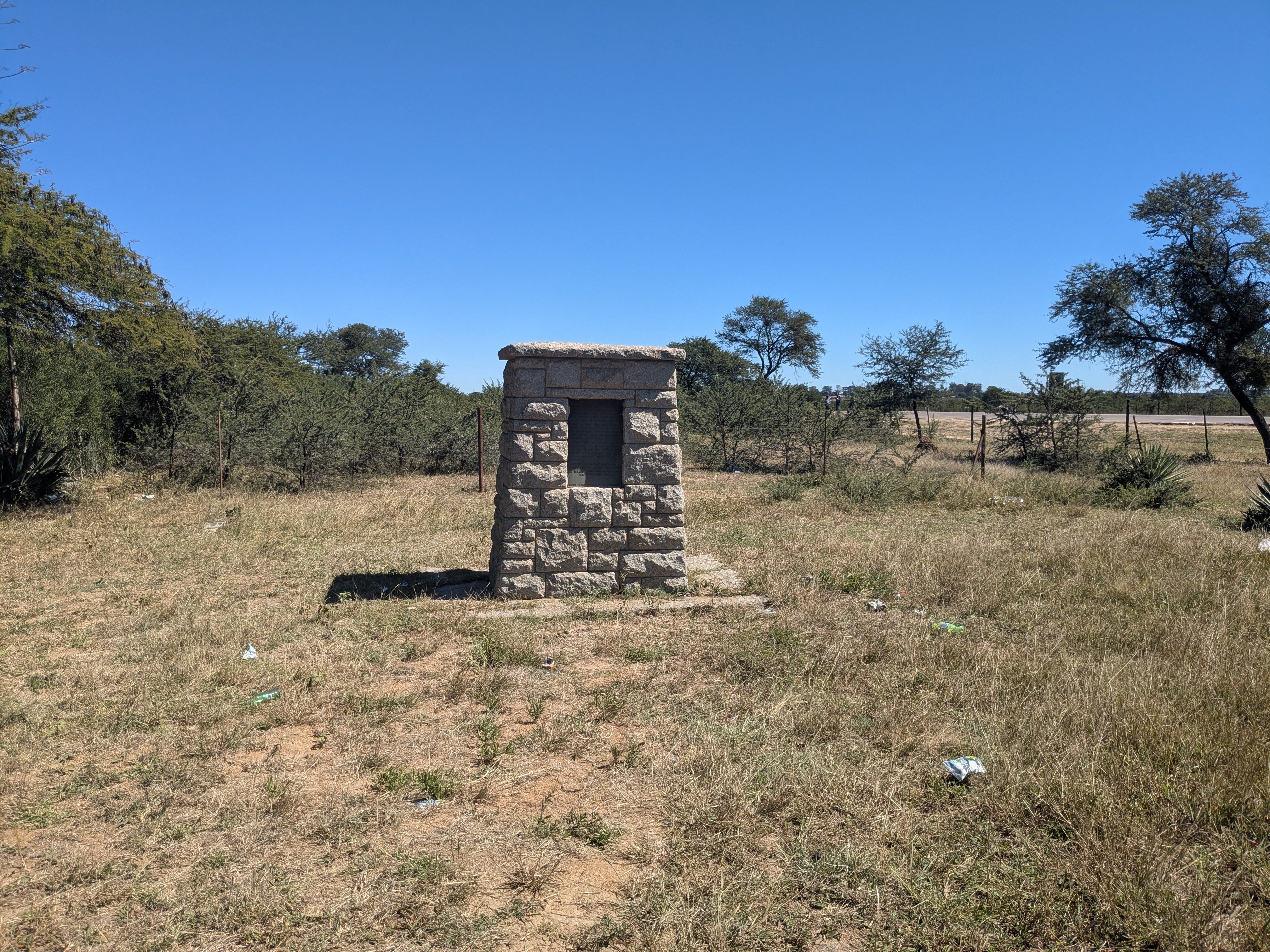
The British defied the odds for one reason: the Maxim machine gun. The first automatic machine gun in the world, the Maxim was capable of delivering an astonishing 600 rounds per minute. The Matabele, a brave and highly successful warrior nation, did not stand a chance. The gun had first been used against them at the Battle of Shangani, 60 kilometers to the north, only 6 days previously, the first time it had been used in anger.
The history of the world is a history of people with superior technology dominating those without it… but rarely has there been such a mismatch as was created by the Maxim machine gun. That gun played a huge role in securing the British empire.
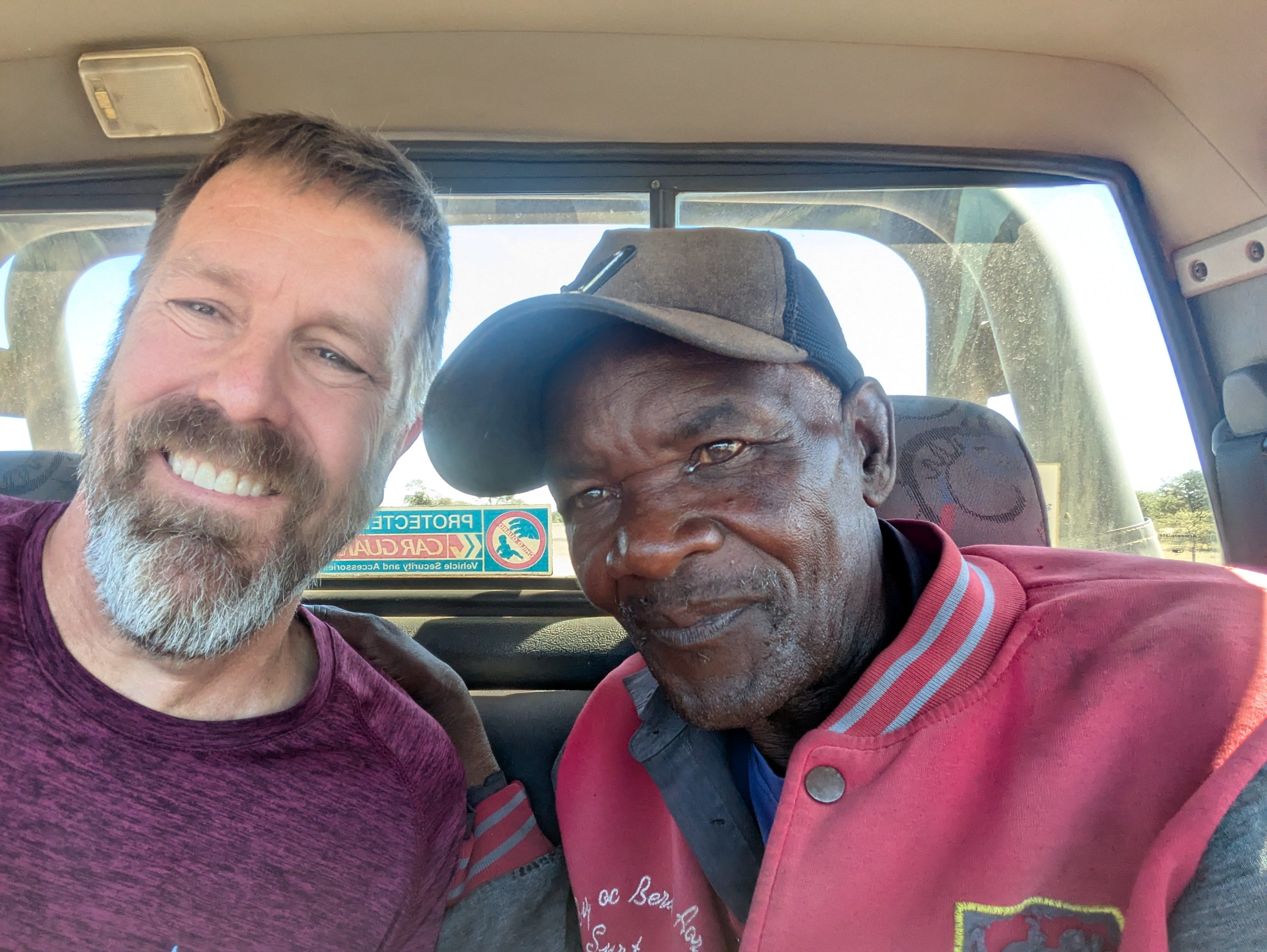
As I turned away from the memorial, an elderly gentleman waved to me, telling me that there were other memorials, deeper into the bush, on the actual site of the battle. He offered to jump into my vehicle and show me. What a privilege it was to spend the next hour in his company.
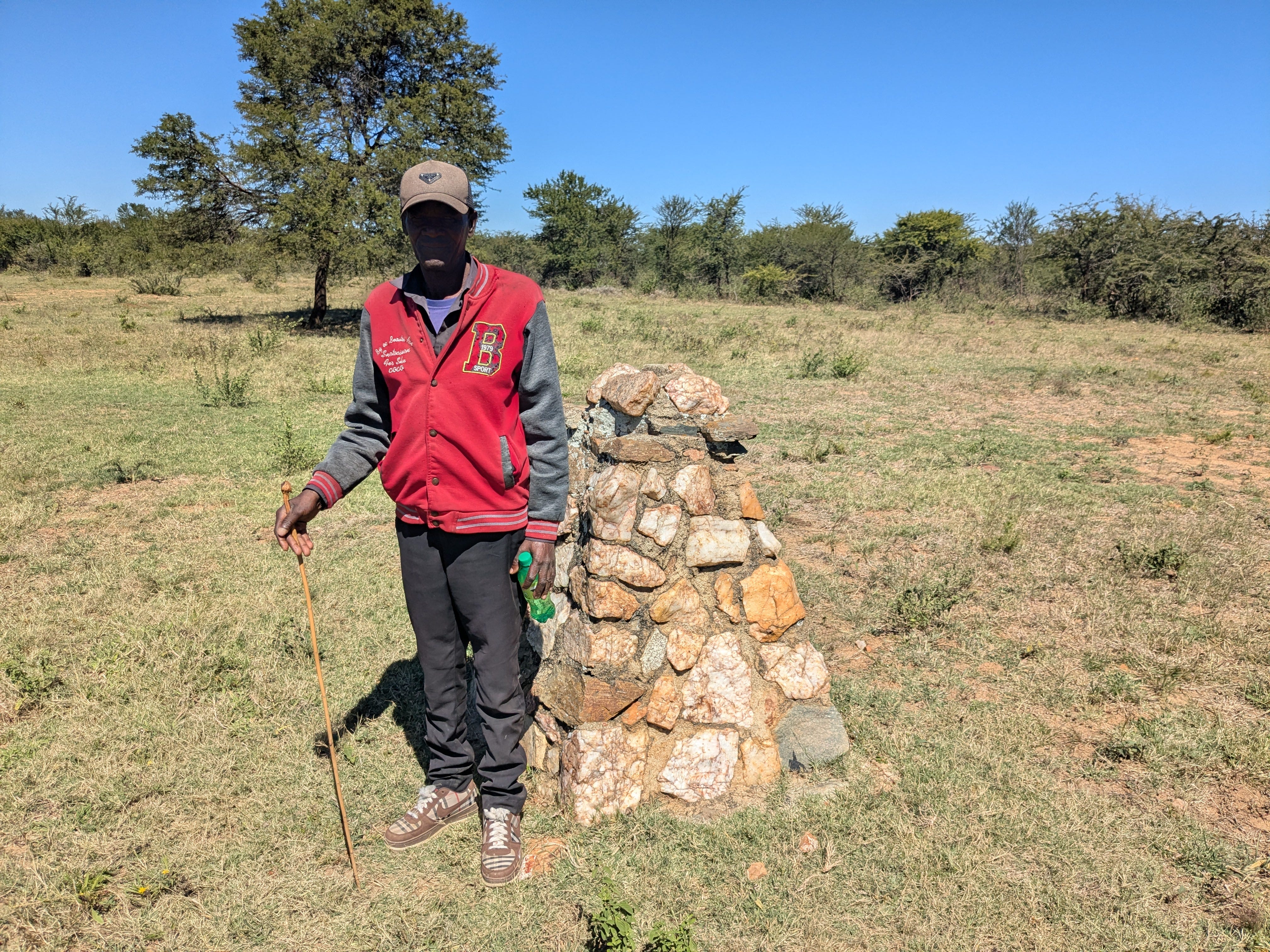
Sipho Nikani, a small and wiry 67 year old Ndebele man with a weather-beaten face that couldn’t hide his big smile, knew his history. He took me to a gravestone erected to the memory of the 2,500 Matabele soldiers that died that day. It sat in a dusty clearing, surrounded by young acacia trees, each standing only 10 feet tall. Was there an atmosphere there? Well I’m sure I wouldn’t have detected one if I’d found myself wandering through the area with no idea of its history. But to stand there knowing that 2,500 men had been slaughtered on that ground, their blood turning the yellow dust red… well, it gave me the chills.
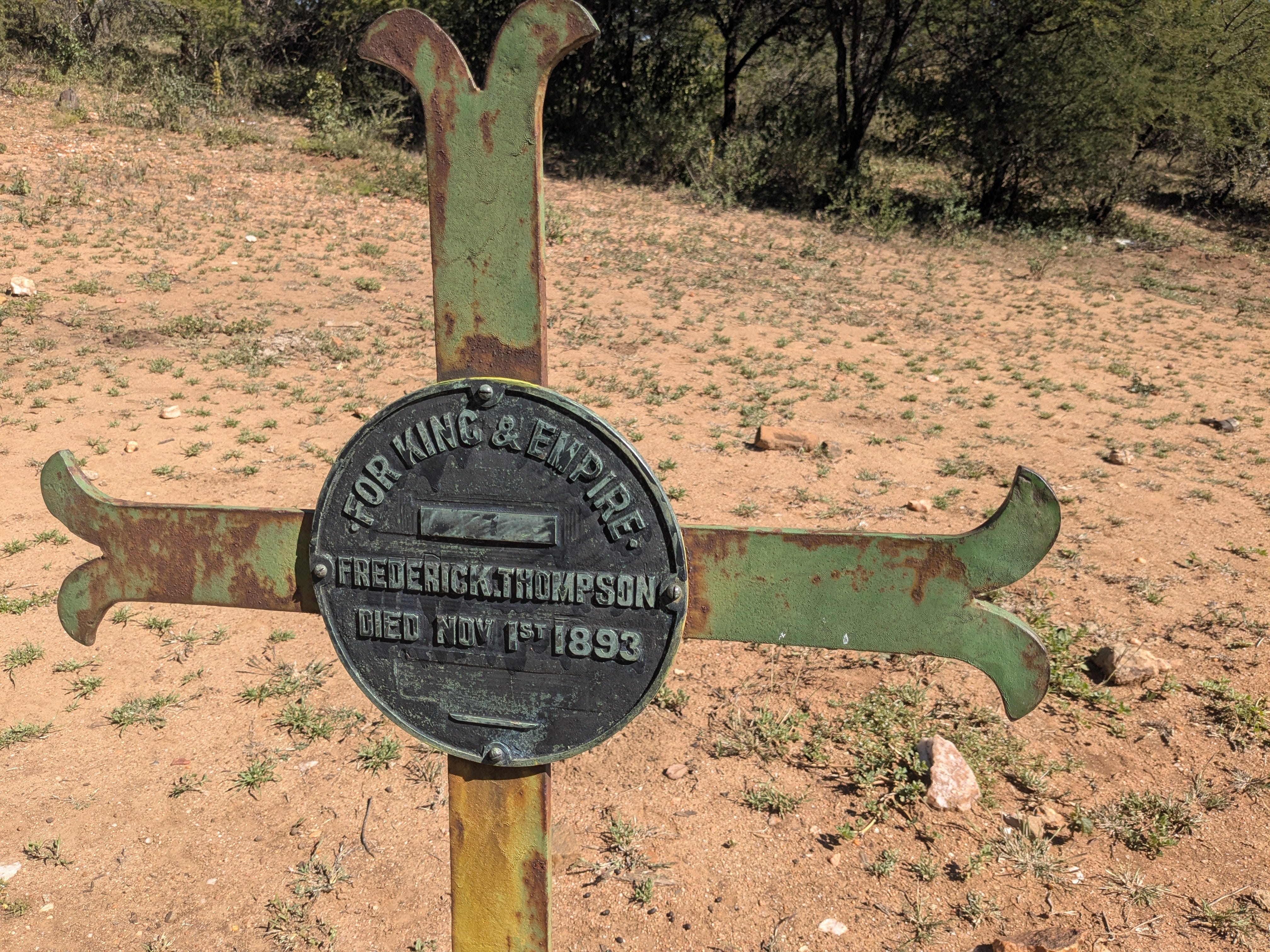
Sipho, whose ancestors fought in the battle, then took me to the grave of the only British soldier to die on the battlefield (three or four others died of their injuries over the following few days). Trooper Frederick Thompson’s grave, marked with a now rusty iron cross, still stands, 132 years later.
The British called the battle, the Battle of Imbembesi, named after the area. The Matabele people call it the Battle of Gadade (pronounced Ga-daddy). Repeat that to yourself quickly and you may hear the sound of a machine gun. And that’s exactly why they call it that. The people of Zimbabwe call that uprising against the British (as opposed to this single battle), the First Chimurenga.
The Second Chimurenga was the liberation war fought by both Matabele and Shona people against the white-only government of Rhodesia in the 60s and 70s, leading to my family leaving the country in 1977 and Zimbabwe securing independence in 1981. It’s probably hard to understand for most people these days - and not something I’m going to go into here in any detail - but a lot of black Zimbabweans fought for the Rhodesian side, primarily serving in the RAR, the Rhodesian African Rifles.
Sipho was one of them. He talked glowingly about his former chief, Chief Khayisa Ndiweni. All those acacia trees barely 10 foot high are because Chief Ndiweni had all the trees chopped down in the early 70’s to stop the guerrilla forces hiding in the area. He was very much on the side of the Rhodesians and marched all the boys in the area down to the army barracks to sign up to the RAR.
“To stop them loitering around,” Sipho said.
One reason why Chiefs like Ndiweni would have supported the status quo - the Rhodesian regime - is because the Rhodesians gave them authority within the governance system, and looked after them. Indeed Chief Ndiweni served as a Senator in the Rhodesian parliament.
Talking to my folks on Whatsapp later in the day, I learnt that Chief Ndiweni was a customer of theirs at J Wightman and Sons, their fruit and vegetable shop in Bulawayo… and became a friend.
“A great man,” said Mum.
History is rarely as simple as we’d like it to be. But if we get the chance to talk to people like Sipho Nikani, it is almost always fascinating.